Geldbörse, Portemonnaie, Brieftasche und Co.
What is the difference?
AN OVERVIEW OF THE DIFFERENT TERMINOLOGIES
Purse or wallet, billfold or coin purse? Which term one prefers for the container for banknotes, coins, and papers is not only a question of geographical origin. While this is probably not irrelevant, there are also differences in word meaning and etymology.
What exactly are the differences between a purse and a coin purse? Are letters actually kept in a billfold? And shouldn't a money bag actually be bag-shaped?
WHERE IS WHAT SAID?
Which term is preferred also depends on the region. In the northern half of Germany, East Belgium and Luxembourg, and Switzerland, the terms Portemonnaie or Portemonee, sometimes also Portmonnee, which originate from French, are mostly used. This can probably be attributed to the proximity to France or French-speaking areas and is comparable to the common use of other French terms such as Trottoir=pavement and Billett=ticket/admission ticket.
In Southern Germany, however, Geldbeutel is the most commonly used term. Austrians prefer to say Geldtasche or Geldbörse. The term Brieftasche is equally associated in all regions with a somewhat larger container in which, in addition to cash and cards, important documents can also be stored.

WALLET
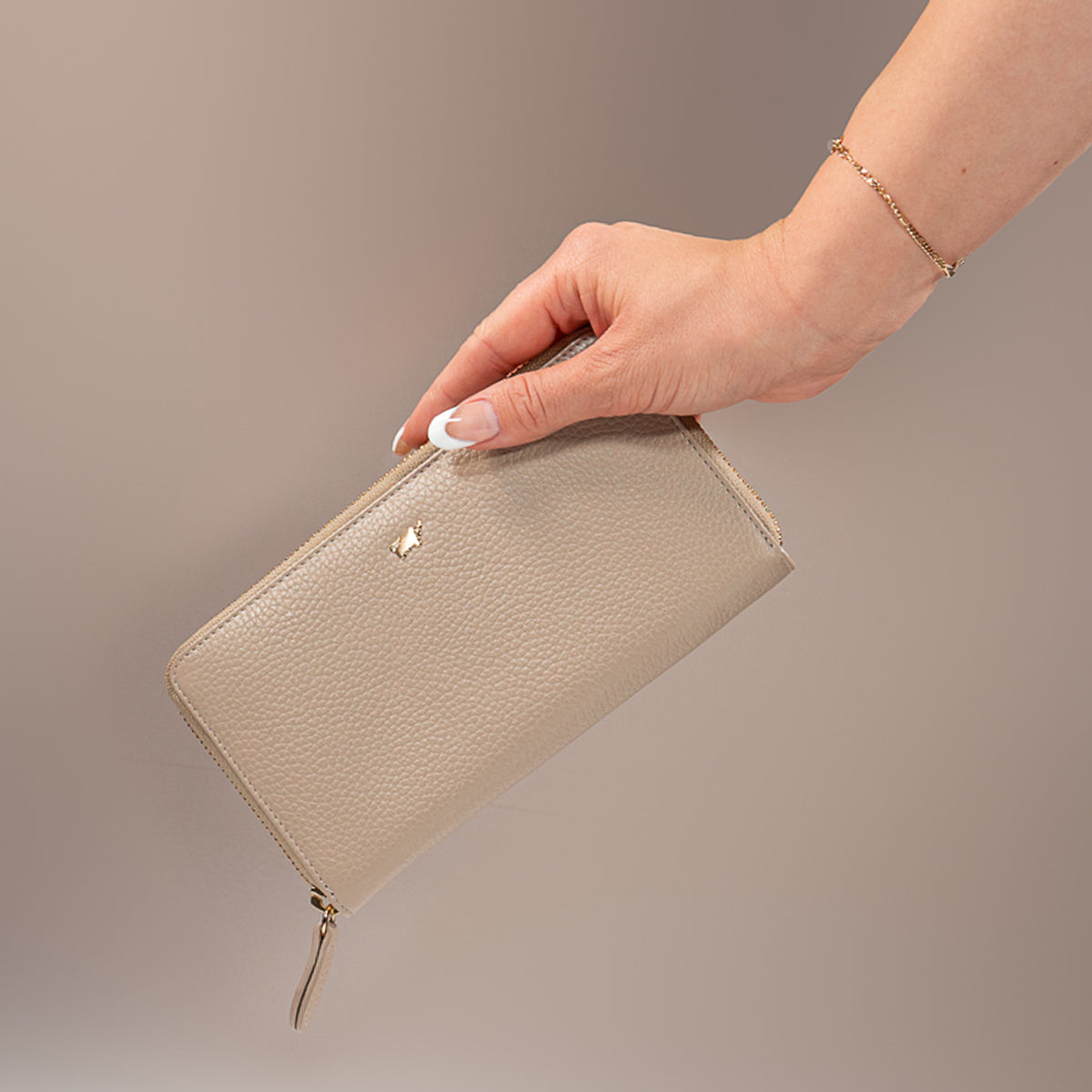
As already mentioned, the term wallet comes from French. It is made up of the words porter = to carry and monnaie = money and originally referred to a bag in which cash - coins and notes - is carried. Today, the wallet is often associated with a slightly larger purse with a zipper or a flap with a snap fastener.
WALLET
In the past, this actually meant a small bag that was attached to the belt filled with coins or other items for exchange. The term still bears witness to the original, sack-like shape of the purse. Today, however, it is also used for rectangular purses with coin, banknote and card compartments.
WALLET
A purse is a bag for money. The term "burse" comes from Latin and means leather bag or money bag. Since the 16th century, the word stock exchange has also referred to a meeting place where traders come together to exchange goods and securities.

WALLET
A wallet is a handy document folder for storing letters, identification papers, driving licenses and the like. It was only after the introduction of paper money that it was sometimes used to carry banknotes. It is usually a little larger than a DIN A6 format and fits exactly into the inside pocket of men's jackets. Since documents such as driving licenses or ID cards were converted to credit card format, the wallet has become increasingly less important.
IRONING PURSE
The characteristic feature of these special wallets is the clasp: this special form of wallet reminds us of our grandmothers and the sound of the snap closure is familiar to everyone. Traditionally, the wallet consists of a large compartment for coins. Today, there are also wallets that are equipped with contemporary card compartments and a bill compartment, while at the same time retaining the vintage charm of the wallet.
Another nostalgic wallet shape for coin lovers is the so-called Viennese box. It is characterized by a coin compartment that opens particularly wide, which is intended to make it easier to search for change. The classic Viennese box is usually square and slightly smaller than a normal wallet.
MODERN UNDERSTANDING OF THE TERMS
Traditionally, wallets were used for documents, while purses or wallets were primarily used to carry coins. Today, the terms are increasingly used synonymously, as documents are becoming more manageable and cash is being replaced in some cases by card payments. New wallet formats such as slim wallets or mini wallets are replacing less manageable models. Those who primarily pay by card may only carry a card case with them or at least opt for a wallet without a coin compartment.
While the trend in everyday life is towards minimalism, there is one large wallet that is still indispensable in the catering industry: the waiter's wallet. This extra large wallet has a lot of compartments for coins and notes, which makes it easier to give out change quickly. They are often combined with a belt bag and attached to it with a chain.
HOW DO I CHOOSE THE RIGHT WALLET SIZE?
The right wallet format depends primarily on personal preferences. Do you want to carry more cards or mainly cash? Do you need a lot of space or do you prefer something small and handy? Today, form mainly follows function. In some cases, the trend is even going back to a small case for daily use and a wallet for documents that are not needed every day.